English follows Japanese section
2026.03.06 月経と上手に付き合いながら働こう
はじめに
オルガノンでは毎年3月の国際女性デーに合わせて、女性たちが自身の健康とどのように向き合っているか、その女性たちを社会がどのように支えているかを理解するための調査を実施してきました。2023年は働く男女を対象に職場における女性の健康課題や対処方法について、2024年は管理職に就く女性を対象として健康がキャリアに与える影響と企業の取組みについて調査しました。2025年は、経団連が会員企業を対象に実施した「『女性と健康』に関する調査」へ協力する機会を得て、女性の健康に対する企業の考えに触れることができました。
調査を続ける中で私たちは、近年の働き方の多様化が、女性たちが自身の健康をケアしながら働き続けていくためにプラスの影響を与えているようだと感じていました。一方で、働く場所や時間に特定の条件がある業種や職種では、こうした柔軟な働き方を選べない場合が多々あります。私たちの過去の調査では、調査対象者の労働環境には条件を設けずに行ってきましたが、こうした環境で働く女性たちの健康に理解を深めるべく、今年は、工場や物流センターなどの出社がほぼ必須(週1回程度のリモート勤務も含む)という勤務条件の職場で働く正社員女性を対象に、月経に関連する症状やトラブル、その対処方法、職場での健康支援について調査を実施しました。
調査結果と回答者属性の詳細はこちらからご覧ください。
7割以上の回答者が月経に関する困りごとを抱え、月経中生理月経中は7割、月経前後でも6割以上が仕事中の生産性低下を感じている
月経に関連して職場で経験した困りごとでは、月経関連症状による集中力の低下(38%)という他人からは見えにくい影響を答えた人が一番多くなりました【Q6】。これに次いで、衣服への経血漏れ(36%)、その背景となり得る、トイレに行くタイミング(24%)や生理用品の持ち合わせ不足(21%)などが挙がっています。
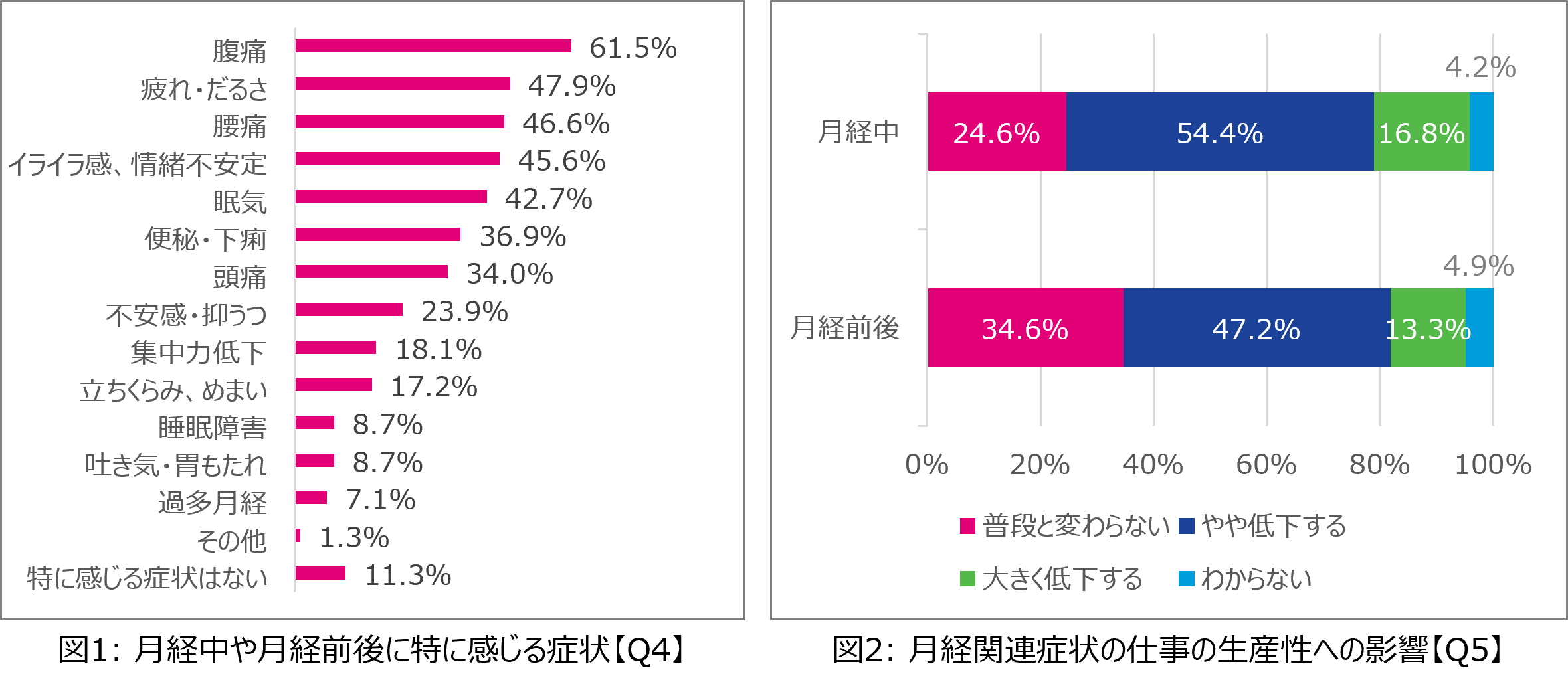
月経に関連した症状としては、腹痛(64%)、腰痛(48%)、頭痛(34%)などの痛み症状に加え、疲れ・だるさ(48%)、イライラ(46%)、眠気(43%)などの全身に渡る症状、精神的な症状も多く報告されており、過去の調査結果と同様に月経に関連する症状が多岐にわたることが改めて確認されました【Q4】(図1)。こうした症状を抱えながら仕事をすることで、仕事中の生産性も低下すると言われています。仕事の生産性への影響として、普段と比べて「やや低下する」「大きく低下する」と答えた人の割合の合計は、月経中では71%、月経前後でも61%となりました【Q5】(図2)。
月経に関連した症状の軽減のため日常的にケアを行う人では6割以上が症状の軽減を感じている。しかし、7割以上は日常的なケアを行っておらず、ケアの大切さが広く認識されていない状況を示唆する
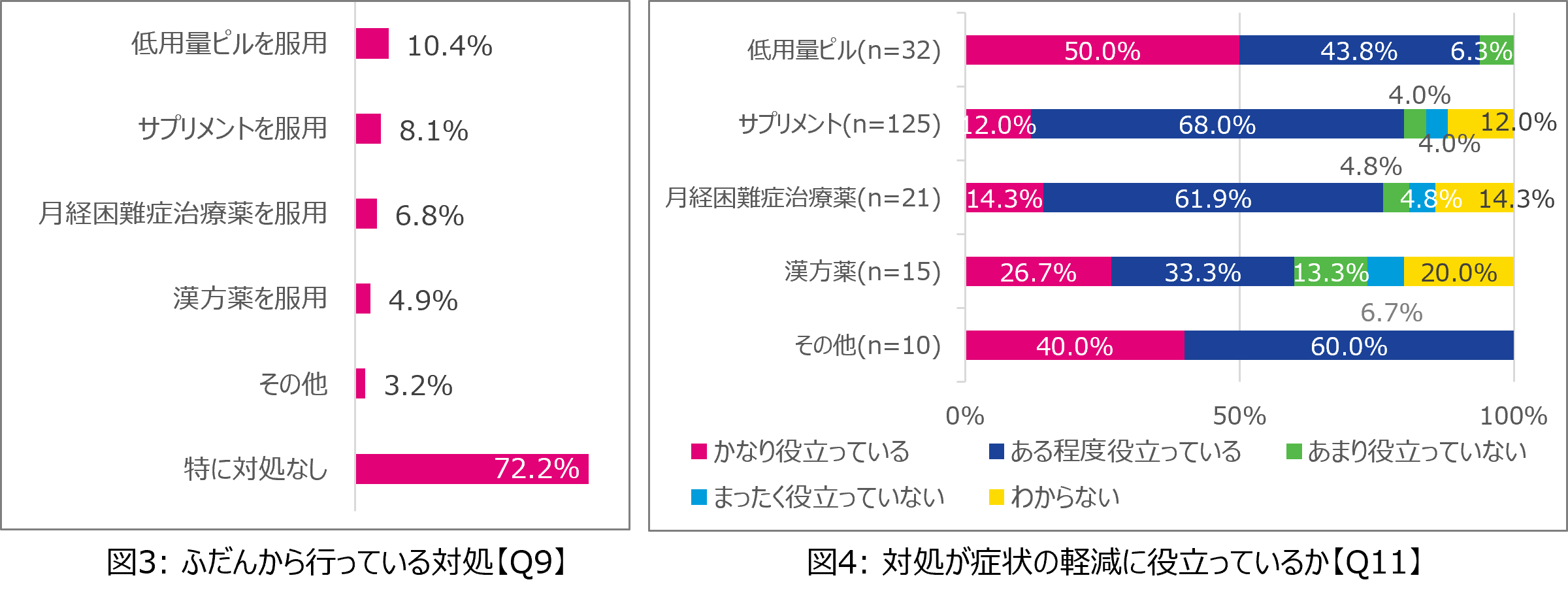
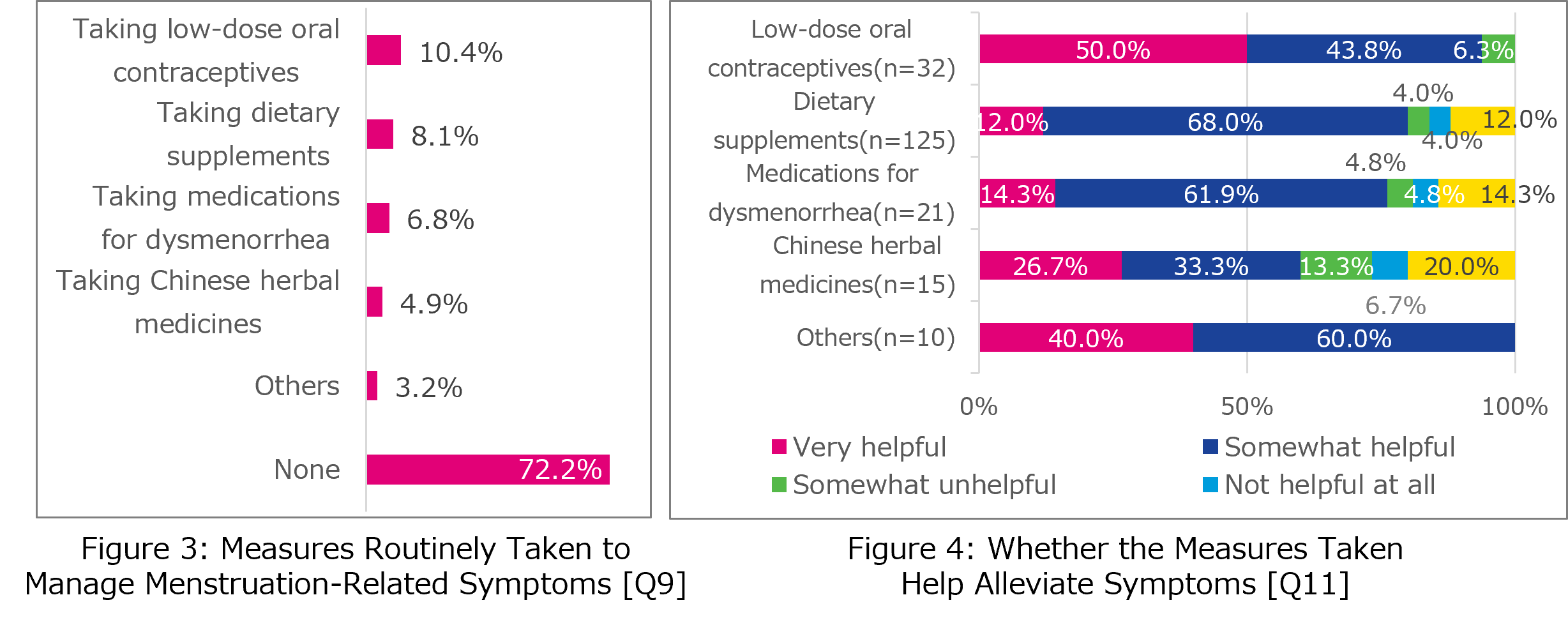
月経に関連する症状の軽減を目的に日ごろから行っているケアとしては、低用量ピル(10%)、サプリメント(8%)、月経困難症治療薬(7%)、漢方薬(5%)などの服用となりました【Q9】(図3)。症状の軽減に対し「かなり役立っている」「ある程度役立っている」と答えた人の合計は、低用量ピル服用者で94%、サプリメント80%、月経困難症治療薬76%、漢方薬60%となり、服用者では多くがそれらの対処が役に立っていると感じているようです【Q11】(図4)。一方で、72%は何かしらの服用を含めて日常的なケアは行っていないと回答しています【Q9】(図3)。
症状が現れた時の対処でも、51%が痛み止めの服用、18%が身体を温める・リラックスするなどを行っていると答えていますが、40%の回答者は特に対処していないと答えています【Q10】。
多くの女性が月経と付き合いながら日々の仕事をこなしています。月経と仕事の関係を考えるにあたって、症状もさまざまで影響が表れる期間も短くないことから、自分の体を知り、日ごろからのケアで上手にコントロールしながら生活していくことが大切です。特に強い症状が見られる場合は婦人科の受診も検討しましょう。
ここまでは女性個人の症状や対処について見てきました。ここからは、そうした女性たちを含む従業員の健康のために企業が提供している制度や取組みについて見ていきます。
勤務・休憩時間の調整など、時間面に配慮する勤務体制を導入している企業もあるが、制度があっても利用しにくい、周囲へ遠慮してしまうなどの理由で、十分に活用されていない状況も推測される
職場で導入されている制度や取組みにおいては、休憩時間の取得や勤務時間の調整など、労働時間に柔軟性を持たせる制度(休憩時間:18%、勤務時間:20%)や、生理休暇を有給で取得可能(19%)であるという回答が見られました【Q12】。「あると良い」と思う制度・取組みでもこれらの選択肢への回答が多かった【Q13】ことから、従業員側でも制度活用のイメージができ、一定のニーズが存在している制度と言えそうです。残念なことに、最多の回答が「該当する制度や取組みはない」で38%、「わからない」と答えた人と合計すると、半数以上の人が企業における従業員の健康のための取組みが十分でない、もしくは取組みがあったとしても認知できていない状況で働いている可能性が推測されます。
導入済みの制度・取組みの使いやすさでは、勤務時間、休憩時間、業務の一次的な調整など、個人やチーム内で調整可能な取組みは、「必要な時に利用できる」と答えた人の割合が相対的に高く、比較的活用が進んでいる取組みと言えます【Q14】。一方で、個人での申請を要すると思われる医療費補助、有給の生理休暇、相談窓口の活用等は、「利用しにくい」「利用したことがない」の合計が50%を越えており、せっかく用意されている制度が十分に活用されていない状況があるのかもしれません。月経に関連する制度の利用しにくさの理由【Q15】においては、男性上司であること(50%)や職場の雰囲気で言い出しにくい(41%)など、話しにくさを感じている人が多く見られました。また、周囲への影響を気に掛ける回答も多く(周囲への迷惑:36%、代わりの人がいない:35%)、身体の不調をコントロールする、不調に向き合うための対応をとることに難しさを抱えている様子であることがうかがえました。
おわりに
近年では、フレックスタイムやリモート勤務など働き方の多様化が進み、体調が揺らぎがちな働く世代の女性たちにとっては、働きやすい、働き続けやすい環境が整ってきています。一方で、そうした選択ができない業種や職種においては、不調と向き合いながらもよりよく働けるための別の方法が模索される必要があります。今回の調査では、製造や物流などの出社を前提とした業務に従事している女性たちの月経と仕事の関係を見てきました。
企業における取組みでは、業務に従事する時間の柔軟化や有給の生理休暇などの制度を導入する企業が見られ、また、回答率は相対的に高くはありませんが、トイレの増設や場所の変更など工事を要するような環境整備を行う企業もあるようです。その一方で、中小企業では、柔軟な勤務体制や福利厚生制度を導入したくとも資金面で難しく、あきらめざるを得ない状況が多いことが知られています (1)。大規模な工事や制度変更となると、企業の規模に関わらず困難ではありますが、特に中小企業においては一朝一夕での変化は難しいことが容易に想像されることから、個人でもできる積極的なセルフケアの活用の検討も女性たちにとっての選択肢と言えるでしょう。
一人ひとりの女性の現状に目を向けると、7割の回答者が月経に関連する何らかの困りごとを持ち、生理中に限らず生理前後でも6割が生産性の低下を感じているにもかかわらず、7割以上の回答者が日常的な対処は行っていないと回答しました。こうした状況の中でも85%の回答者が欠勤はしていないと答えており、症状の出方には個人差があるとはいえ、多くの人が何かしらの我慢をしながら出社している様子がうかがえます。出社しなければ業務自体が成り立たない業種や職種だからこそ、不調のまま業務に従事するよりは、安定した体調を維持しながら業務ができる工夫ができるとよいですね。
日本の慣習の中ではいまだに、月経は自分で対処するもの、症状は我慢するもの、という考えが根強いかもしれません。我慢できないほどの影響ではないから、特に何も対処していないという人もいることでしょう。しかし、今回の調査では、月経に関連する症状を軽減するために何らかの対処を行っている人の多くが、その対処法を役立っていると感じていることが分かりました。月経中だけでなく月経前後にも影響を感じる人も多いことから、月経中の一次的な対処ではなく、日常的なケアも検討に値すると言えます。婦人科はちょっとハードルが高いと感じる人もいるかもしれませんが、医師に相談することで、薬の服用による症状の軽減や薬以外の対処方法も教えてくれることでしょう。また、特に症状が強い場合には適切な治療を受けることが重要です。
毎日少しずつケアをするだけで、女性たちの明日が、もう少し過ごしやすいものになるかもしれません。私たちオルガノンは、より多くの女性たちが忙しい毎日の中でちょっとだけ立ち止まって、ご自身の身体をいたわる方法に思いを巡らせる時間をほんの少しでも持ってほしいと願っています。
参考情報
- 帝国データバンク「福利厚生に関する企業の実態調査 企業の約5割が福利厚生の充実に前向き 採用・定着率向上が狙い ~一方、中小企業では充実に慎重 資金面がネックに~」https://www.tdb.co.jp/report/economic/20251023-employeebenefits/(最終アクセス日 :2026年3月5日)
2026.03.06 Menstruation and its impact on women’s work productivity: Can we still comfortably work with menstruation?
Introduction
At Organon, we have conducted an annual survey in conjunction with International Women’s Day in March to better understand how women engage with their own health and how society supports them in doing so. In 2023, we surveyed working men and women about women’s health issues in the workplace and how their companies address them. In 2024, we focused on women in managerial positions, examining the impact of health on their careers as well as corporate initiatives in this area. In 2025, we had the opportunity to collaborate on the “Survey on Women and Health” conducted by Keidanren, The Japan Business Federation, among its member companies, which allowed us to gain insight into how companies view women’s health and how they address issues female employees face in workplace.
Through these surveys, we have observed that the recent diversification of work styles has positively impacted women’s ability to continue working while taking care of their health. At the same time, in industries and occupations where work location and hours are subject to specific requirements, many employees are unable to choose such flexible work arrangements. Our previous surveys did not place conditions on respondents’ work environments. However, to deepen our understanding of the health of women working under these constraints, this year we conducted a survey targeting full-time female employees in workplaces, such as manufacturing facilities and warehouses, where on-site attendance is generally required (including those who are permitted to work remotely about once a week). The survey examined menstrual-related symptoms and concerns, how they are managed, and workplace health support.
See here for detailed respondent demographics and survey results.
More than 70% of respondents experience difficulties related to menstruation, with 70% reporting decreased productivity during menstruation and over 60% reporting decreased productivity even before and after menstruation.
When asked about difficulties experienced in the workplace related to menstruation, the most common response was reduced concentration due to menstrual symptoms (38%), an impact that is often not visible to others [Q6]. This was followed by leakage of menstrual blood onto clothing (35%), as well as related factors such as difficulty going to the restroom when needed (24%) and not having sufficient menstrual products on hand (21%).
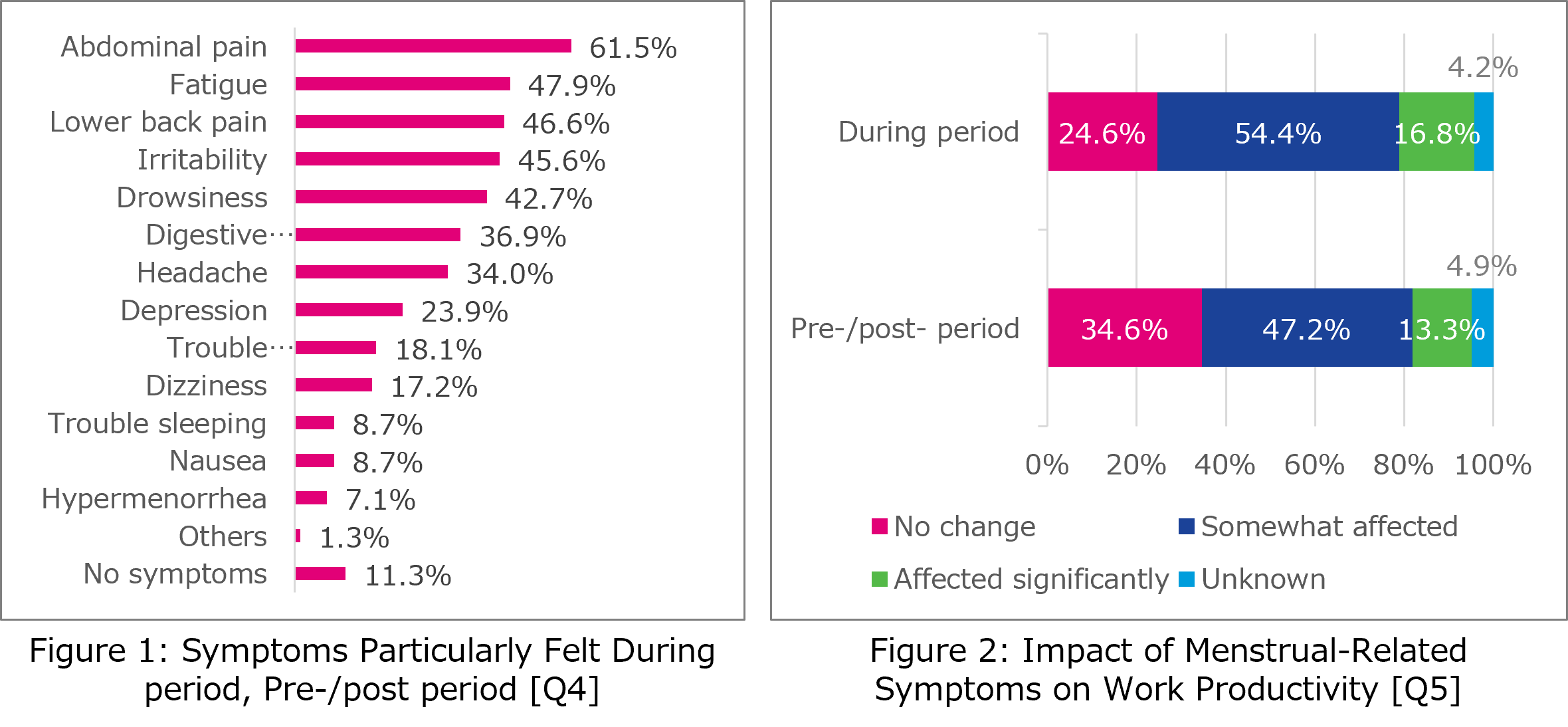
Regarding menstrual-related symptoms, in addition to pain symptoms such as abdominal pain (64%), lower back pain (47%), and headaches (34%), many respondents also reported systemic and psychological symptoms, including fatigue (48%), irritability (46%), and drowsiness (43%). Consistent with past survey results, these findings once again confirm that menstrual-related symptoms are wide-ranging [Q4](Figure 1). It is said that working while experiencing such symptoms can lead to decreased productivity on the job. The combined percentage of respondents who indicated that their productivity is “somewhat affected” or “affected significantly” compared to usual was 71% during menstruation and 61% in the periods before and after menstruation [Q5](Figure 2).
More than 70% do not engage in routine care to alleviate menstrual-related symptoms. However, among those who do practice routine care, over 60% report experiencing symptom relief, suggesting the importance of such care is not recognized enough by women
As part of their regular efforts to reduce related discomfort, respondents reported taking low-dose oral contraceptives (10%), dietary supplements (8%), medications for dysmenorrhea (7%), and Chinese herbal medicines (5%) [Q9](Figure 3). The combined percentage of those who indicated that these measures are “very helpful” or “somewhat helpful” in alleviating symptoms was 94% among low-dose oral contraceptive users, 80% among dietary supplement users, 76% among those taking medications for dysmenorrhea, and 60% among herbal medicine users, suggesting that many users perceive these treatments as helpful [Q11](Figure 4). Meanwhile, 72% responded that they do not take any medications or supplements on a routine basis [Q9](Figure 3).
In terms of how respondents cope when symptoms arise, 51% reported taking pain relievers and 18% reported measures such as warming the body or relaxing while 40% of respondents indicated that they do not take any particular action [Q10].
Many women carry out their daily work responsibilities while managing menstruation. Symptoms vary widely by person to person and their effects may not be limited to just the period, but before and after the period. In considering the influence of menstruation on work, it is essential to recognize the importance of routine care based on understanding of one’s own body and to manage symptoms effectively. It is also critical to consider visiting a gynecologist if symptoms are severe and affect daily life.
Up to this point, we have examined women’s individual symptoms and how they cope with them. We now turn to the benefits and initiatives companies provide to support the health of employees, including these women.
While some companies have introduced flexible working time arrangements, these systems may not always be easy to use due to complications in administrative process and hesitation about inconveniencing others
Regarding workplace benefits and initiatives, some respondents indicated that their companies offer flexibility in working hours, such as the ability to take breaks when needed (18%) or adjust working hours (20%), as well as paid menstrual leave (19%) [Q12]. These options were also frequently selected when respondents were asked which systems or initiatives they felt “would be good to have” [Q13], suggesting that employees can envision using these measures and that a certain level of need exists for them. Unfortunately, the most common response was “no applicable benefits or initiatives,” at 38%. When combined with those who answered “unknown,” it can be inferred that more than half of respondents are working in environments where company initiatives to support employee health are either insufficient or not adequately communicated.
As for the ease of using benefits and initiatives already in place, measures that can be adjusted at the individual or team level—such as working hours, break times, and temporary workload adjustments—were more likely to be described as “available when needed,” suggesting relatively greater utilization of these options [Q14]. In contrast, for measures that appear to require individual application—such as medical expense subsidies, paid menstrual leave, and consultation services—the combined percentage of respondents who answered “difficult to use” or “have never used” exceeded 50%, suggesting that these systems, despite being available, are not fully utilized. When asked about reasons for difficulty in using those benefits and initiatives, many respondents cited discomfort in raising the issue, including having a male supervisor (50%) and a workplace atmosphere in which it is difficult to speak up (41%) [Q15]. Many also expressed concern about the impact on others (inconveniencing colleagues: 36%; no available replacement personnel: 35%), indicating that employees may face challenges in taking steps to manage or address their physical symptoms.
Discussion
In recent years, work styles have become increasingly diverse, with the spread of flextime and remote work helping to create environments that are more sustainable for women of working age, whose physical condition may fluctuate. At the same time, in industries and occupations where such options are not adaptable, it is necessary to explore alternative ways to enable women to work more effectively while managing their symptoms. In this survey, we examined the influence of menstruation on work among women whose jobs require regular on-site attendance.
In terms of corporate initiatives, some companies have introduced systems such as flexible working hours, adjustable break times, and paid menstrual leave. Although the proportion was not particularly high, there appear to be companies that have improved restroom environments, including increasing the number of restrooms or relocating them, even when these changes require construction. On the other hand, it has been reported that small and medium-sized enterprises often face financial constraints that make it difficult to introduce flexible working arrangements or employee benefits, leaving them with little choice but to forgo such measures¹. Given that resolving the challenges faced by small and medium-sized enterprises is unlikely to happen overnight, proactively incorporating self-care practices that individuals can undertake on their own may offer a practical and quickly adaptable option for women.
Looking at the current situation of individual women, 70% of respondents reported experiencing some form of difficulty related to menstruation, and 60% reported a decline in productivity not only during menstruation but also in the periods before and after. Despite this, more than 70% indicated that they do not engage in routine care to address their symptoms. Even under these circumstances, 85% reported that they do not take time off from work. Although the severity and nature of symptoms vary from person to person, these findings suggest that many women continue working while enduring a certain level of discomfort. Maintaining good health condition by taking proactive measure is even more important for those women who work in occupations where attendance to workplace is mandatory.
Within Japanese society, the notion that menstruation is something to be managed privately and that symptoms should simply be endured may still be deeply ingrained. Some may feel that their symptoms are not severe enough to warrant taking any particular action. However, this survey found that among those who take some form of care to alleviate menstrual symptoms or discomforts, many report experiencing benefits. Given that many women feel the effects not only during menstruation but also before and after, routine care—not only temporary measures taken during menstruation—may be worth considering. Although some may feel that visiting a gynecologist presents a psychological hurdle, consulting a physician can provide options for symptom relief through medication as well as guidance on non-pharmacological approaches. The importance of consultation from medical professionals needs to be particularly emphasized for the women who experience severe symptoms that affect daily life and work.
Even small, daily efforts at self-care may help make tomorrow a little more comfortable for women. At Organon, we hope that more women, even amid their busy daily lives, will take a brief moment to pause and reflect on ways to care for their own bodies.
Reference:
- Teikoku Databank, LTD. “Survey on Corporate Welfare Benefits” https://www.tdb.co.jp/report/economic/20251023-employeebenefits/ (Last accessed: Mar 5, 2026)